
How to Remove Pet Stains and Odors from Carpet: What Actually Works
By Black Diamond Services | Professional Carpet & House Cleaning in Stanislaus and San Joaquin Counties
The key to removing pet stains and odors from carpet is speed, the right cleaning approach, and understanding that what you see on the surface is only part of the problem. Pet urine penetrates carpet fibers, soaks into the backing, and saturates the padding underneath—which is why surface cleaning often fails to eliminate odors completely.
We’ve treated thousands of pet stains in homes across Oakdale, Modesto, Turlock, Ripon, and throughout the Central Valley since 2017. The difference between stains that come out completely and those that become permanent almost always comes down to how quickly they’re addressed and whether the right methods are used.
This guide covers immediate response steps for fresh accidents, why common DIY approaches often make things worse, when professional treatment is necessary, and how to prevent future accidents from becoming permanent problems.
Why Pet Stains Are Different from Other Carpet Stains
Pet urine presents unique challenges that other common stains—coffee, wine, food—don’t share.
Urine Penetrates Deeper Than Other Liquids
When a pet urinates on carpet, the liquid doesn’t just sit on the surface. Urine is warm and has low surface tension, which means it spreads quickly and soaks downward through the carpet fibers, through the carpet backing, into the padding, and sometimes into the subfloor beneath.
A single accident from a medium-sized dog can affect an area three to four times larger below the surface than what’s visible on top. This is why cleaning only the visible stain often leaves odors behind—the source of the smell is in the padding, not the carpet fibers you can see and touch.
The Chemistry Changes Over Time
Fresh urine is acidic with a pH around 5-6. At this stage, it’s easier to neutralize and extract. But as urine dries, bacteria begin breaking down the urea into ammonia and other compounds. This process shifts the pH to alkaline (pH 10-12) and creates the strong, persistent odor associated with old pet stains.
This chemical transformation is why old stains smell worse than fresh ones and why they require different treatment approaches. The ammonia salts that form as urine ages bond with carpet fibers in ways that fresh urine doesn’t.
Proteins Create Permanent Bonds
Pet urine contains proteins that can permanently bind to carpet fibers if not removed promptly. Once these protein bonds form—typically within 24-48 hours—the stain becomes much more difficult or impossible to remove completely. Even if the visible discoloration fades, the protein residue remains and can yellow over time, especially when exposed to sunlight.
Odors Trigger Repeat Accidents
Dogs and cats can detect urine odors at concentrations far below what humans can smell. If any odor remains after cleaning, pets often return to the same spot for future accidents. This creates a cycle where the same area is repeatedly soiled, compounding the damage with each incident.
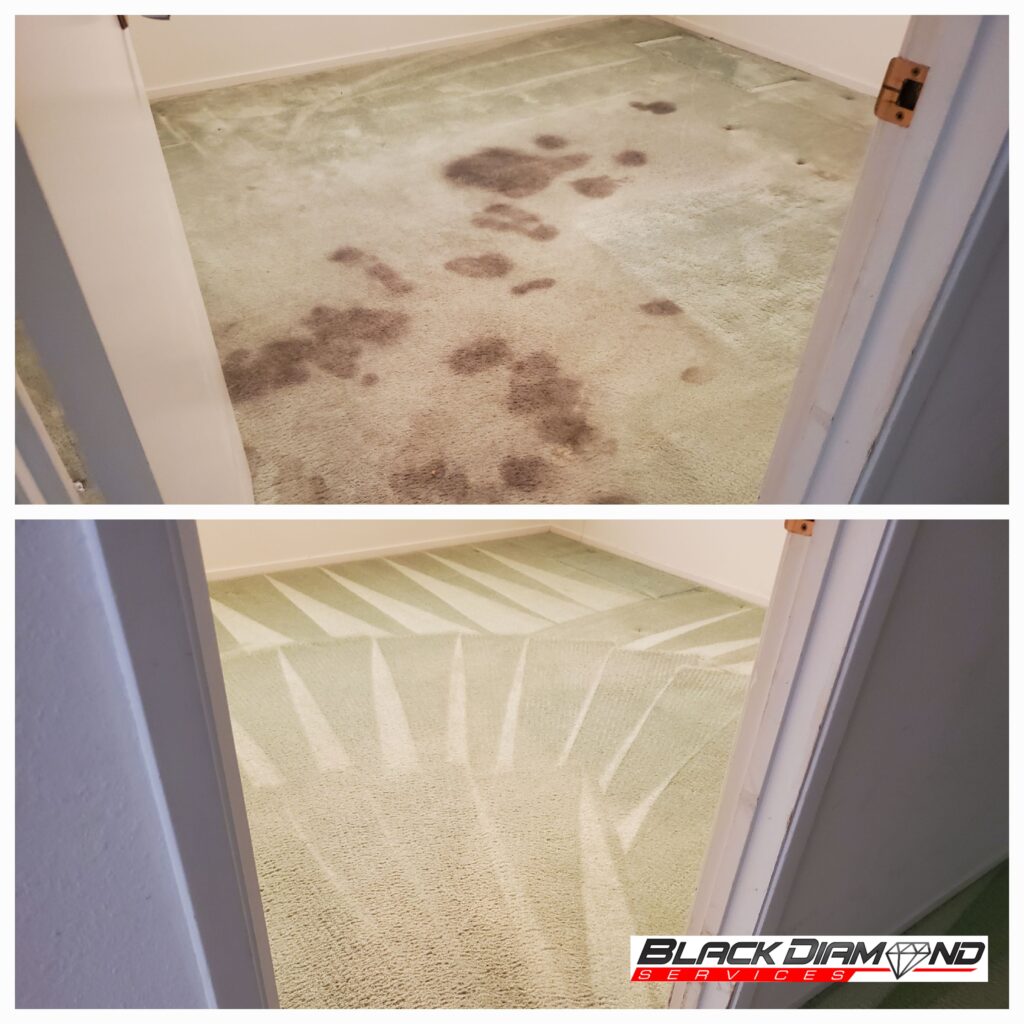
Immediate Response: What to Do When Accidents Happen
How you respond in the first 15-30 minutes after a pet accident significantly affects whether the stain becomes permanent. Here’s the step-by-step process:
Step 1: Absorb as Much Liquid as Possible
For fresh urine, absorption is your first priority. Use clean white towels or paper towels—avoid colored or printed materials that could transfer dye to your carpet.
Place towels over the wet area and stand on them to apply pressure. The goal is to draw urine up out of the carpet and padding before it has time to spread further. Replace saturated towels with fresh ones and repeat until no more moisture transfers to the towel.
For larger accidents, you may need a significant stack of towels. Don’t skimp on this step—every bit of urine you remove now is urine that won’t need to be treated later.
Step 2: Apply Cool Water and Repeat Absorption
After removing as much urine as possible, pour a small amount of cool water over the affected area. This dilutes remaining urine in the carpet fibers and padding. Then repeat the absorption process with fresh towels.
Use cool water, not hot. Hot water can set protein stains and make them more difficult to remove later.
Step 3: Apply an Enzyme-Based Cleaner
Enzyme cleaners contain biological agents that break down the proteins and uric acid in pet urine. Unlike chemical cleaners that mask odors or only address surface staining, enzymes actually digest the odor-causing compounds.
Saturate the affected area with enzyme cleaner, including the carpet backing if possible. The cleaner needs to reach everywhere the urine went. Follow the product instructions for dwell time—most enzyme cleaners need to remain wet on the stain for 10-15 minutes or longer to work effectively.
After the appropriate dwell time, blot up the cleaner with fresh towels. Allow the area to dry completely.
Step 4: Check Results After Drying
Once the area is fully dry, check for remaining stains or odors. Get your nose close to the carpet—subtle odors at carpet level may not be noticeable when standing. If odor remains, the urine likely penetrated into the padding or backing and requires deeper treatment.
What Not to Do: Common Mistakes That Make Pet Stains Worse
Many well-intentioned cleaning attempts actually make pet stains harder to remove or cause additional damage. Avoid these common mistakes:
Don’t Use Steam Cleaners on Fresh Stains
Heat sets protein stains. Using a steam cleaner or hot water on a fresh pet stain before the proteins are removed can bond the stain permanently to carpet fibers. Always treat pet stains with enzyme cleaners first, then follow up with extraction cleaning after the enzymes have done their work.
Don’t Rub or Scrub the Stain
Rubbing spreads the stain outward and drives urine deeper into carpet fibers and backing. It can also damage carpet fibers, creating a fuzzy, distorted texture in the affected area. Always blot with downward pressure rather than rubbing side to side.
Don’t Use Ammonia-Based Cleaners
Ammonia smells similar to urine to pets, which can encourage them to mark the same spot again. Additionally, ammonia is alkaline like aged urine, so it doesn’t neutralize odors effectively. Stick to enzyme-based cleaners specifically designed for pet accidents.
Don’t Over-Wet the Carpet
Adding too much liquid during cleaning can spread urine further into the padding and subfloor. Use enough water to dilute the urine but not so much that you’re expanding the affected area. Professional extraction removes moisture along with contaminants, but DIY cleaning without extraction can make over-wetting a significant problem.
Don’t Use Bleach
Bleach can discolor or damage carpet fibers and isn’t effective at removing urine odors. It may temporarily mask the smell but doesn’t address the underlying contamination. On some carpet types, bleach causes permanent color loss that’s worse than the original stain.
Don’t Assume Deodorizers Solve the Problem
Products that promise to eliminate odors by fragrance alone—sprays, powders, and plug-in fresheners—simply mask the smell without removing the source. The odor returns once the fragrance fades, and pets can still smell the urine underneath. True odor elimination requires removing or neutralizing the urine itself.
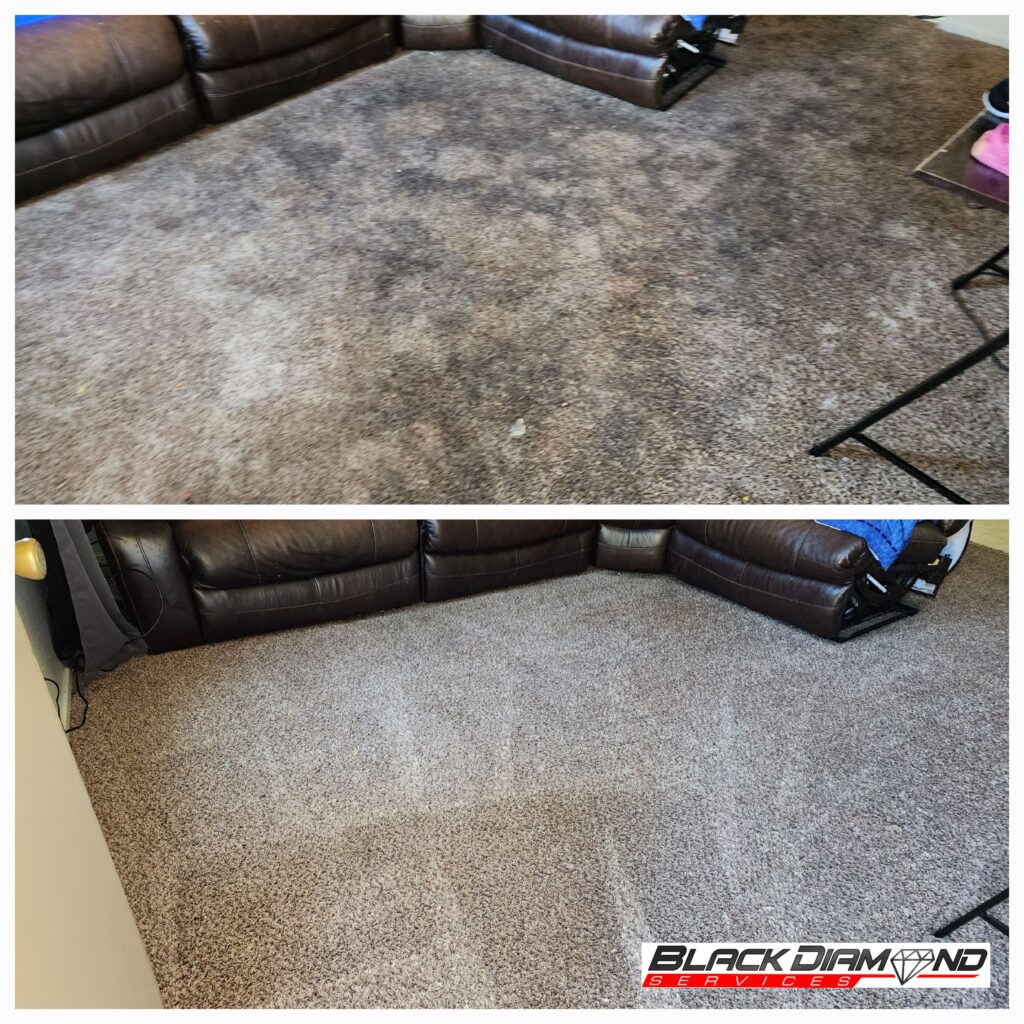
When DIY Isn’t Enough: Signs You Need Professional Treatment
Some pet stain situations exceed what home treatment can resolve. Professional intervention is necessary when:
The Stain Has Dried Before Treatment
Once urine has fully dried and the chemical transformation to alkaline salts has occurred, enzyme cleaners alone may not be sufficient. Professional treatment can address old stains with specialized solutions and extraction equipment that reaches the carpet backing and padding.
Odors Persist After Home Treatment
If you’ve treated a stain correctly but odor remains, the urine has almost certainly reached the padding. Carpet padding acts like a sponge, holding urine and odor even after the carpet fibers above are clean. Professional extraction with subsurface tools can treat the padding, or in severe cases, the padding may need replacement.
Multiple Accidents in the Same Area
Repeated accidents in one location create cumulative contamination that surface cleaning cannot address. Each incident adds to the urine absorbed in the padding, and the concentration eventually exceeds what home treatment can neutralize.
You Can’t Locate the Source
Sometimes you can smell pet urine but can’t find where it’s coming from. Old, dried stains may not be visible to the naked eye, especially on patterned or darker carpets. Professional cleaners use UV black lights to locate urine deposits that aren’t visible under normal lighting—dried urine fluoresces under UV light, revealing the exact location and extent of contamination.
Visible Staining Remains
Yellow or brown discoloration that remains after cleaning indicates that proteins have bonded with carpet fibers or that the stain has caused chemical changes in the carpet dye. Professional treatment offers the best chance of reducing visible staining, though some discoloration may be permanent depending on carpet type and how long the stain remained untreated.
The Carpet Has a Strong Ammonia Smell
A strong ammonia odor indicates significant bacterial activity and aged urine contamination. This level of odor typically means urine has saturated the padding and possibly reached the subfloor. Professional treatment—and potentially padding replacement—is usually necessary.
How Professional Pet Stain Treatment Works
Professional pet odor and stain treatment goes beyond standard carpet cleaning. Here’s what the process involves:
Inspection with UV Light
Before treatment, technicians use UV black lights in a darkened room to identify all areas of urine contamination. This often reveals stains that homeowners didn’t know existed—behind furniture, in corners, and in areas where dried urine left no visible mark.
UV inspection maps the full extent of contamination so treatment addresses every affected area, not just obvious spots.
Enzyme Pre-Treatment
Professional-grade enzyme solutions are applied to all identified areas. These commercial enzymes are more concentrated and effective than consumer products. The solution is allowed to dwell while the enzymes break down urine proteins and uric acid.
For severe contamination, this step may be repeated multiple times before extraction.
Subsurface Extraction
Standard carpet cleaning extracts water and contaminants from carpet fibers. Pet urine treatment requires subsurface extraction tools that penetrate through the carpet backing to extract contamination from the padding underneath.
This specialized equipment applies solution and suction directly to the backing and padding rather than just the carpet surface. It’s the only way to address urine that has soaked through without removing the carpet entirely.
Padding Treatment or Replacement
In cases of severe or repeated contamination, carpet padding cannot be salvaged. Padding is porous and absorbent—once saturated with urine, it may hold odor permanently regardless of treatment.
When necessary, technicians pull back the carpet, remove the affected section of padding, treat the subfloor if needed, install new padding, and re-stretch the carpet. This is the most complete solution for severe pet odor problems but adds cost and time to the project.
Topical Treatment and Neutralization
After extraction, additional enzyme or oxidizing treatments may be applied to ensure complete odor elimination. These products continue working as the carpet dries, addressing any remaining odor-causing compounds.
Verification
Professional services verify results by checking treated areas after drying. If any odor remains, additional treatment is applied. This verification step ensures the problem is fully resolved rather than temporarily masked.
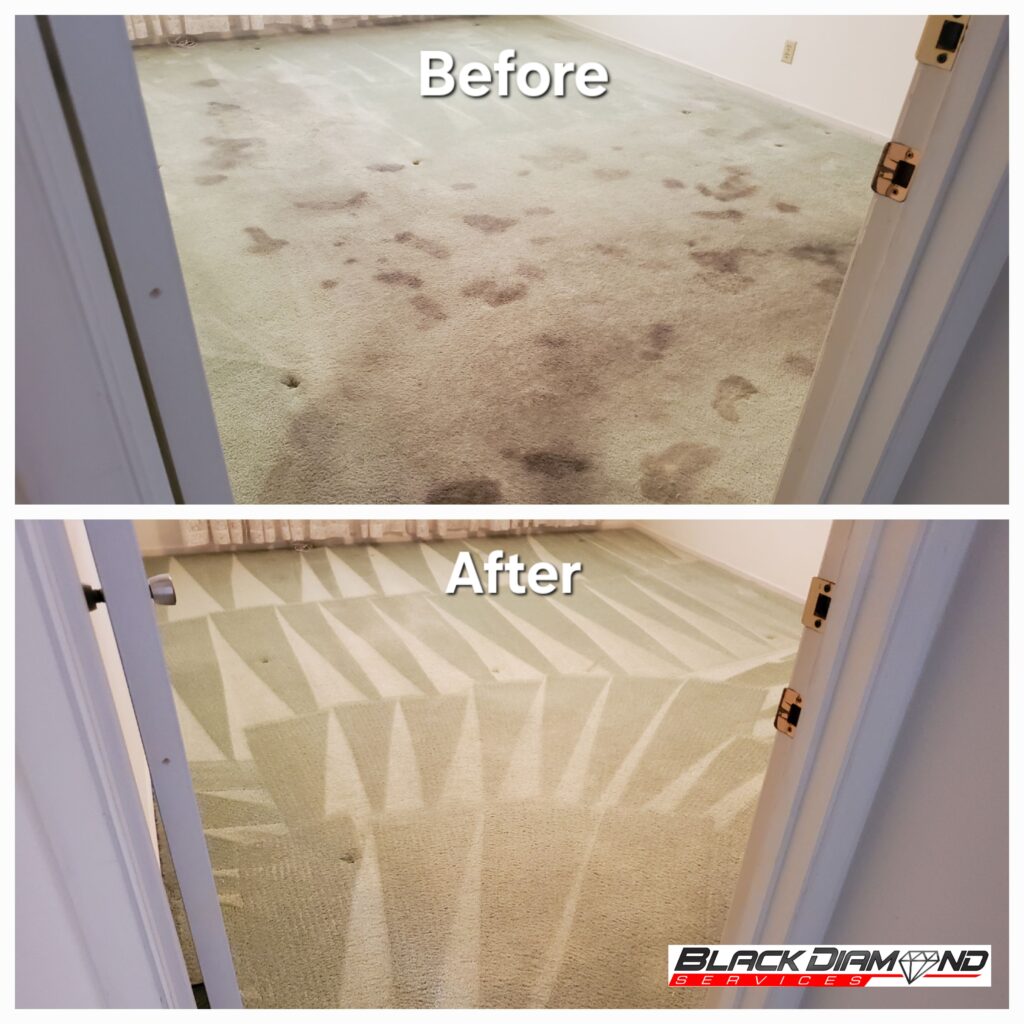
Special Situations: Cat Urine vs. Dog Urine
While the treatment approach is similar, cat and dog urine present different challenges.
Cat Urine Is More Concentrated
Cats produce more concentrated urine than dogs, which means cat urine contains higher levels of odor-causing compounds per volume. A small cat accident can produce as much odor as a much larger dog accident.
Cat urine odor is also more persistent. The concentration of uric acid—the compound most resistant to cleaning—is significantly higher in cat urine than dog urine.
Marking vs. Accidents
Male cats and dogs that mark territory deposit urine in small amounts on vertical surfaces—walls, furniture legs, curtains. These deposits are harder to locate because they’re small and often not on the floor. UV inspection is particularly valuable for identifying marking behavior.
Marking also tends to be repeated in the same locations, creating concentrated contamination even though individual deposits are small.
Litter Box Issues
Cats avoiding their litter box may create concentrated contamination in specific areas they’ve chosen as alternatives. Understanding and addressing the underlying reason for litter box avoidance—medical issues, box cleanliness, location preference—is necessary to prevent ongoing problems.
Preventing Future Problems
Once you’ve dealt with a pet stain, preventing future incidents protects your investment in cleaning.
Address Accidents Immediately
Keep enzyme cleaner and white towels accessible so you can respond to accidents within minutes. Immediate response prevents most accidents from becoming permanent stains or odors.
Eliminate All Odor
Pets return to areas where they can smell previous accidents. After cleaning any stain, verify that no odor remains by getting your nose close to the carpet after it’s fully dry. If you can’t smell anything but you’re not sure, a UV light can reveal whether any residue remains.
Consider Carpet Protection
Scotchgard and similar carpet protectants help prevent liquids from penetrating carpet fibers as quickly, giving you more time to respond to accidents. Protection doesn’t make carpet stain-proof, but it provides a valuable window for cleaning before absorption occurs.
Rule Out Medical Issues
Sudden house-training regression in previously reliable pets often indicates medical problems—urinary tract infections, kidney issues, diabetes, or age-related incontinence. A veterinary check should be the first response to unexpected indoor accidents.
Maintain Regular Professional Cleaning
Regular professional carpet cleaning removes accumulated pet dander, hair, and residual odors that build up even without visible accidents. For households with pets, cleaning every six months rather than annually helps maintain carpet condition and air quality.
Carpet Types and Pet Stain Response
Different carpet fibers respond differently to pet stains and treatments.
Nylon
Nylon is the most common residential carpet fiber and generally responds well to pet stain treatment. It’s durable, resists fiber damage during cleaning, and holds up to enzyme treatments and extraction. However, nylon can absorb urine deeply, so prompt treatment is still essential.
Polyester
Polyester resists staining better than nylon because it’s less absorbent, but this also means liquids sit on the surface longer before being absorbed—giving you more time to blot up accidents. However, polyester fibers crush more easily, so aggressive scrubbing should be avoided.
Wool
Wool requires careful treatment because it’s a natural protein fiber sensitive to pH extremes and aggressive chemicals. Standard enzyme cleaners may damage wool, and high-alkaline solutions can cause permanent harm. Professional cleaning is recommended for pet stains on wool carpet.
Olefin (Polypropylene)
Olefin is highly stain-resistant and doesn’t absorb liquids readily. Pet stains on olefin carpet are often easier to remove than on nylon because penetration is slower. However, olefin attracts oily soils, so thorough cleaning is still necessary to prevent residue buildup.
Realistic Expectations: What Can and Can’t Be Fixed
Honest assessment helps set appropriate expectations:
What Professional Treatment Can Typically Accomplish
- Complete odor elimination from carpet, padding, and backing when contamination is addressed before permanent damage occurs
- Significant reduction of visible staining, though some discoloration may remain
- Restoration of carpet texture after proper extraction and grooming
- Breaking the cycle of repeat accidents by eliminating odor triggers
What May Be Beyond Repair
- Stains that have caused chemical changes to carpet dye—particularly yellowing from old urine
- Carpet fibers that have been bleached or discolored by urine left untreated for extended periods
- Severe contamination where urine has reached and damaged the subfloor
- Padding that has been repeatedly saturated—replacement is the only permanent solution
When Replacement Makes More Sense
In some cases, replacing carpet and padding in the affected area costs less than extensive treatment with uncertain results. This is particularly true for:
- Very old contamination that has been repeatedly cleaned without success
- Large areas affected by ongoing accidents over months or years
- Carpet that’s already near the end of its useful life
- Subfloor damage that requires exposure for treatment
A reputable cleaning service will give you an honest assessment of whether treatment is likely to succeed or whether replacement makes more sense for your situation.
Frequently Asked Questions
How quickly do I need to treat a pet accident?
Ideally within 15-30 minutes, but sooner is always better. Fresh urine is much easier to remove than dried urine. If you catch an accident immediately, thorough blotting followed by enzyme treatment often prevents any permanent staining or odor.
Why does my carpet still smell after cleaning?
The odor source is almost certainly in the padding or carpet backing, not the fibers. Surface cleaning—including rental carpet cleaners—doesn’t reach deep enough to extract urine from the padding. Professional subsurface treatment is typically required.
Can I use vinegar to remove pet stains?
Vinegar is acidic and can help neutralize fresh urine, but it doesn’t break down the proteins and uric acid that cause permanent staining and odor. Enzyme cleaners are more effective for pet stains. Also, the vinegar smell may be unpleasant as the carpet dries.
How do I find old pet stains I can smell but can’t see?
Use a UV black light in a darkened room. Dried urine fluoresces under UV light, appearing as a yellow or green glow. Inexpensive UV flashlights are available at pet stores and home improvement stores, or professional cleaners can perform this inspection.
Will professional cleaning guarantee the smell is gone?
Reputable services will verify results and retreat if odor remains. However, extremely severe contamination—particularly when urine has reached the subfloor or when padding is saturated—may require padding replacement for complete odor elimination. Honest technicians will assess the situation and set realistic expectations before beginning work.
How much does professional pet stain treatment cost?
Basic pet treatment during a standard carpet cleaning typically adds $20-50 per area treated. Severe contamination requiring subsurface extraction costs more—$75-150 or more per area depending on the extent. Padding replacement, if necessary, adds additional cost for materials and labor.
Should I replace my carpet if I have pets?
Not necessarily. Most pet accidents can be successfully treated if addressed promptly. However, homes with elderly pets, pets with medical conditions, or multiple pets that have ongoing accidents may benefit from hard surface flooring in high-risk areas with area rugs that can be cleaned or replaced more easily.
Can pet stains come back after cleaning?
Yes, if the stain wasn’t fully removed. Residual urine in the padding can wick back up into carpet fibers as humidity changes, causing stains to reappear. This is why thorough treatment reaching the padding is essential—surface cleaning alone often results in recurring stains.
About Black Diamond Services
Black Diamond Services is a family-owned carpet and house cleaning company based in Oakdale, California, serving Stanislaus and San Joaquin counties since 2017. Founded by Nolan and Janel Hill, Black Diamond has earned over 275 five-star reviews by treating every home like our own.
We specialize in pet stain and odor removal using professional enzyme treatments, UV inspection, and subsurface extraction equipment that reaches contamination in carpet padding. Our technicians are trained to assess pet damage honestly and recommend the most effective solution for your specific situation.
We provide carpet cleaning, house cleaning, tile and grout cleaning, rug cleaning, upholstery cleaning, hardwood floor cleaning, luxury vinyl plank cleaning, natural stone cleaning, and dryer vent cleaning throughout Oakdale, Modesto, Turlock, Tracy, Manteca, Ripon, Riverbank, Hughson, Escalon, Salida, Denair, and surrounding Central Valley communities.
Every job includes our 100% satisfaction guarantee, transparent pricing with no hidden fees, and the personalized service you’d expect from a local, family-operated business.
Dealing with pet stains or odors? Call Black Diamond Services at (209) 264-8898 for a free estimate.
Last updated: March 2026