
Oriental and Area Rug Cleaning: On-Site vs. Facility Deep Clean
By Black Diamond Services | Professional Carpet & House Cleaning in Stanislaus and San Joaquin Counties
Area rugs and oriental rugs require different cleaning approaches than wall-to-wall carpet. The construction methods, fiber types, dyes, and backings vary dramatically—and using the wrong cleaning method can cause irreversible damage to rugs worth hundreds or thousands of dollars.
The central question most homeowners face is whether to have rugs cleaned in their home (on-site cleaning) or send them to a facility for deep cleaning. Both approaches have legitimate applications, but choosing the wrong one for your rug’s condition and construction can lead to problems ranging from incomplete cleaning to permanent damage.
We’ve cleaned area rugs and oriental rugs in homes throughout Oakdale, Modesto, Turlock, Tracy, Manteca, and the Central Valley since 2017. This guide explains the differences between on-site and facility cleaning, which rugs need which approach, and how to maintain your rugs between professional cleanings.
Understanding Your Rug
Before discussing cleaning methods, you need to understand what you’re cleaning. Rugs vary dramatically in construction, and this affects which cleaning methods are safe and effective.
Hand-Knotted Oriental Rugs
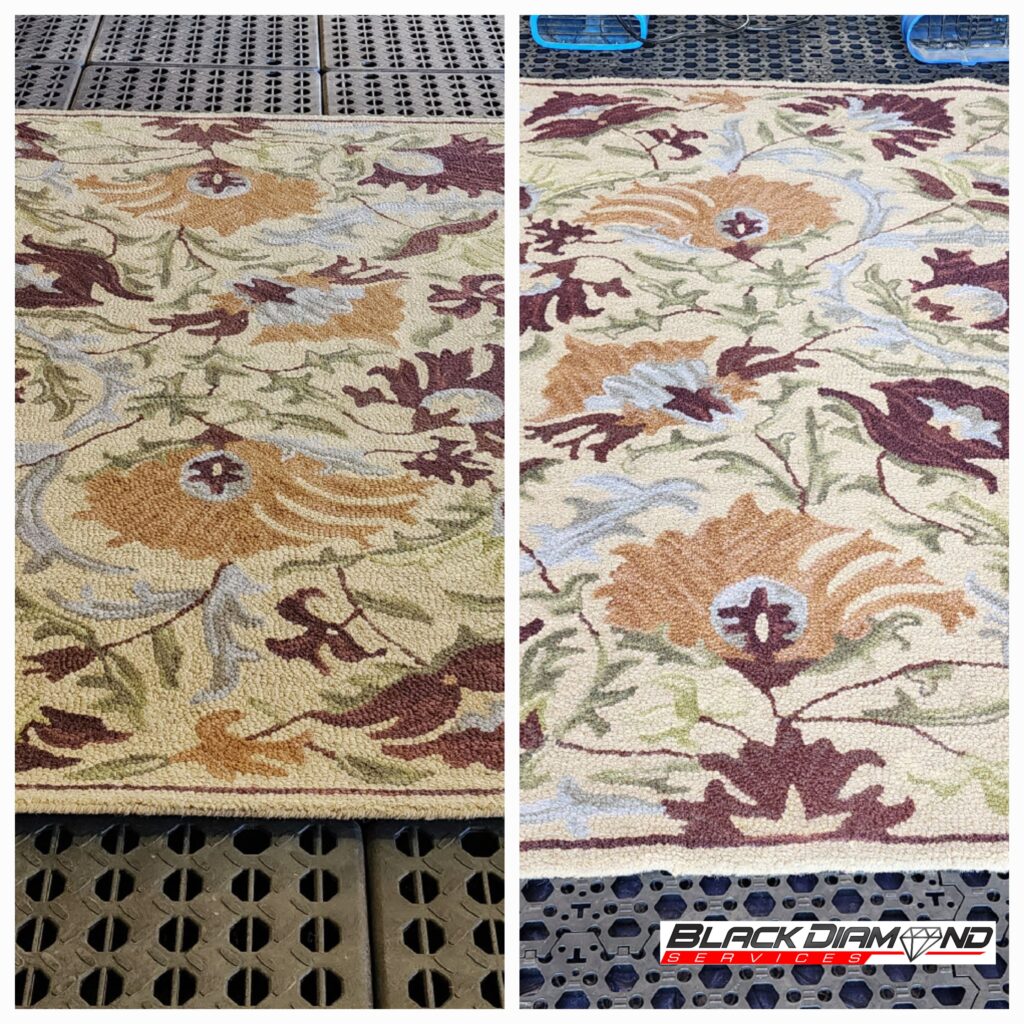
Traditional oriental rugs—Persian, Turkish, Afghan, Indian, Chinese—are hand-knotted from wool, silk, or cotton on a foundation of cotton or wool warps and wefts. Each knot is tied individually, creating dense, durable pile that can last generations with proper care.
Characteristics:
- Natural fibers (wool, silk, cotton)
- Natural or traditional dyes (though modern pieces may use synthetic dyes)
- No backing material—the knot structure itself forms the back
- Fringe is an extension of the foundation, not attached separately
- Often significant monetary and sentimental value
- Can be extremely old (antique rugs 80+ years)
Cleaning considerations:
- Natural dyes in older rugs may be unstable and bleed when wet
- Wool can shrink if cleaned with excessive heat or agitation
- Silk is delicate and requires specialized handling
- Cotton foundations can mildew if not dried properly
- Improper cleaning can cause dye migration, texture change, or foundation damage
Machine-Made Area Rugs
Most affordable area rugs sold at home goods stores are machine-made, typically from synthetic fibers on a synthetic or jute backing.
Characteristics:
- Synthetic fibers (polypropylene, nylon, polyester) or machine-processed wool
- Synthetic dyes (generally stable)
- Attached backing material (latex, jute, felt, or rubber)
- Fringe is sewn or glued on, not structural
- Moderate price point, easier to replace
- Expected lifespan of 5-15 years depending on quality
Cleaning considerations:
- Backings can delaminate (separate from the rug face) with excessive moisture
- Latex backings can become sticky or crumble with age or improper cleaning
- Jute backings absorb water and are prone to browning and mildew
- Generally more tolerant of standard cleaning methods than hand-knotted rugs
- Some budget rugs aren’t worth professional cleaning costs
Handmade Flat-Weave Rugs
Kilims, dhurries, and other flat-weave rugs have no pile—the pattern is created by the weave structure itself.
Characteristics:
- No pile (flat surface)
- Often reversible
- Typically wool or cotton
- Lighter weight than pile rugs
- Can be delicate despite simple appearance
Cleaning considerations:
- Prone to shrinkage if cleaned incorrectly
- Dyes may be less stable than pile rugs
- Soil penetrates through the weave (no pile to trap it at the surface)
- Fringe is typically structural and delicate
Tufted Rugs
Tufted rugs have pile pushed through a backing material and held in place by adhesive and a secondary backing.
Characteristics:
- Loops or cut pile pushed through primary backing
- Latex adhesive holds fibers in place
- Secondary backing (usually fabric) covers the latex
- Can be wool, synthetic, or blends
- Often confused with hand-knotted rugs by consumers
Cleaning considerations:
- Latex layer is vulnerable to moisture and heat
- Backing can separate from face with improper cleaning
- Browning can occur if latex is disturbed and migrates to surface
- Generally cleaned similarly to machine-made rugs, with moisture precautions
On-Site Rug Cleaning: How It Works
On-site cleaning means the rug is cleaned in your home without being removed. This is the same approach used for wall-to-wall carpet, adapted for area rugs.
The Process
- Pre-inspection: Technician examines the rug for construction type, fiber content, stains, damage, and any conditions requiring special attention.
- Pre-vacuuming: Thorough vacuuming removes loose soil before wet cleaning. For area rugs, both sides should be vacuumed when possible.
- Pre-treatment: Cleaning solution is applied to break down soil and treat stains.
- Cleaning: Hot water extraction (steam cleaning) or low-moisture cleaning removes soil and cleaning solution. The rug is cleaned in place on your floor.
- Drying: Fans or air movers speed drying. The rug remains in place during drying.
Advantages of On-Site Cleaning
Convenience: No need to roll, transport, or be without your rug. Cleaning happens during a scheduled appointment, and the rug is usable again within hours.
Cost: On-site cleaning typically costs less than facility cleaning because it requires less labor (no pickup, transport, specialized facility processes, or delivery).
Suitable for many rugs: Machine-made synthetic rugs, newer wool rugs with stable dyes, and rugs without significant soiling or damage clean well on-site.
Combined with other cleaning: If you’re having carpets or upholstery cleaned, adding area rugs to the same appointment is efficient.
Limitations of On-Site Cleaning
Moisture control: On-site cleaning uses moisture that can soak through to flooring underneath. Technicians place protective barriers beneath rugs, but extended drying times or excessive moisture can still affect certain rug types and floors.
Cannot flip the rug: Soil embedded deep in the pile and foundation can’t be accessed from one side only. On-site cleaning cleans the top surface effectively but can’t address contamination that has migrated through the rug.
Drying limitations: Rugs dry in place, which means the backing and foundation may retain moisture longer than ideal. This can cause issues with natural fiber backings and foundations.
Not suitable for heavily soiled rugs: Rugs with pet urine contamination, significant staining, or years of accumulated soil need more intensive treatment than on-site cleaning provides.
Not suitable for delicate rugs: Hand-knotted oriental rugs with natural dyes, silk rugs, antique rugs, or any rug with questionable colorfastness shouldn’t be cleaned on-site. The risk of damage is too high.
Facility Rug Cleaning: How It Works
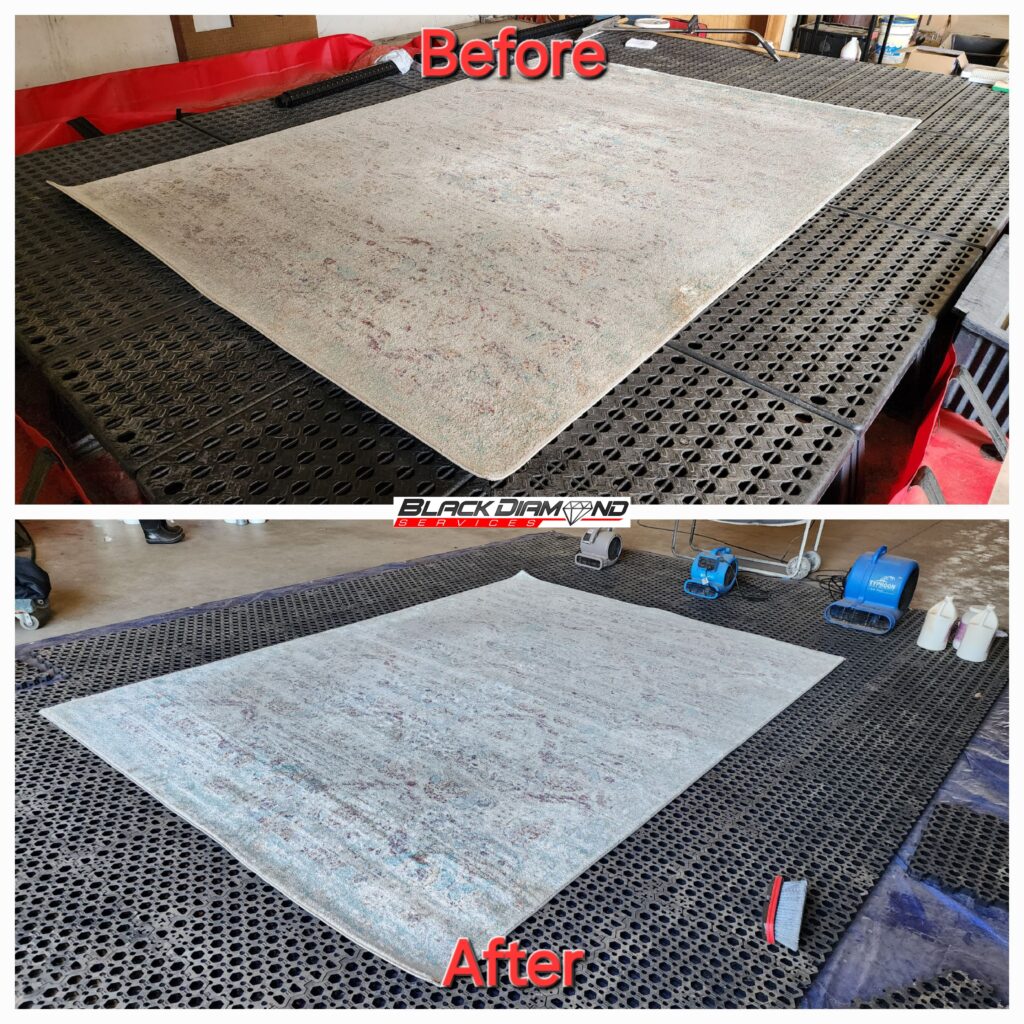
Facility cleaning involves picking up the rug, transporting it to a specialized cleaning facility, and returning it after cleaning and drying.
The Process
- Pickup: The rug is carefully rolled and transported to the cleaning facility.
- Inspection and testing: Detailed inspection identifies fiber content, dye stability, construction type, existing damage, and any special concerns. Colorfastness testing determines safe cleaning approaches.
- Dusting: Rugs are mechanically dusted or beaten to remove dry soil embedded deep in the pile and foundation. This step removes far more soil than vacuuming alone—often pounds of dust and grit from a single rug.
- Washing: Depending on the rug type, washing may involve full immersion in cleaning baths, controlled hand washing, or specialized low-moisture methods. Water temperature, pH, and agitation are controlled based on the specific rug.
- Rinsing: Thorough rinsing removes all cleaning solution and suspended soil. Multiple rinse cycles ensure no residue remains.
- Controlled drying: Rugs are dried in climate-controlled environments—often hung or laid flat with air circulation. Drying may take 24-72 hours depending on rug construction and thickness. Controlled drying prevents mildew, shrinkage, and dye problems.
- Finishing: Fringe cleaning, pile grooming, and final inspection ensure the rug is ready for return. Minor repairs may be performed.
- Delivery: The cleaned rug is rolled, wrapped, and returned to your home.
Advantages of Facility Cleaning
Complete soil removal: Mechanical dusting alone removes soil that on-site cleaning can’t access. Combined with thorough washing and rinsing, facility cleaning achieves deeper cleaning than any on-site method.
Both sides accessible: The rug can be flipped, hung, and manipulated to clean both pile side and foundation. Contamination that has penetrated through the rug (like pet urine) can be addressed from both directions.
Controlled drying: Rugs dry completely in ideal conditions, eliminating mildew risk and preventing the browning that can occur when rugs dry slowly in humid conditions.
Safe for delicate rugs: Hand-knotted orientals, silk rugs, antiques, and rugs with unstable dyes can be cleaned safely with methods tailored to their specific vulnerabilities.
Pet urine treatment: Urine contamination requires flushing the rug from both sides and treating the foundation—processes only possible in a facility setting.
Stain treatment: Specialized stain removal techniques and extended dwell times work better in a controlled facility environment.
Limitations of Facility Cleaning
Cost: Facility cleaning costs more than on-site cleaning due to the additional labor, transport, and facility overhead involved.
Time without the rug: Your rug is gone for 1-2 weeks typically. For rugs in primary living spaces, this can be inconvenient.
Transportation requirements: Large or heavy rugs require significant handling for pickup and delivery.
Which Rugs Need Which Cleaning Method?
Here’s a practical guide to choosing the right approach:
On-Site Cleaning Is Appropriate For:
- Machine-made synthetic rugs (polypropylene, nylon, polyester) in good condition
- Newer wool rugs with stable dyes and no significant contamination
- Rugs with moderate soiling that need refreshing but aren’t heavily contaminated
- Indoor/outdoor rugs designed for durability
- Low-to-moderate value rugs where convenience and cost are priorities
- Rugs cleaned regularly (annual or more frequent maintenance cleaning)
Facility Cleaning Is Recommended For:
- Hand-knotted oriental rugs regardless of condition
- Silk rugs or rugs with silk content
- Antique rugs (typically 80+ years old)
- Rugs with natural dyes or any suspected dye instability
- Pet urine contamination—urine cannot be fully addressed on-site
- Heavy soiling or embedded dirt—rugs that haven’t been cleaned in many years
- Rugs with significant staining requiring extended treatment
- High-value rugs where protecting the investment justifies the cost
- Rugs with odor problems that haven’t responded to surface cleaning
- Rugs with previous water damage or suspected mildew
When in Doubt
If you’re uncertain which method your rug needs, err toward facility cleaning for:
- Any rug of significant value (monetary or sentimental)
- Any rug you can’t easily replace
- Any rug with visible issues (staining, odor, contamination)
The cost difference between on-site and facility cleaning is typically $100-300. For a rug worth $1,000 or more, facility cleaning is cheap insurance.
Rug Cleaning Costs in the Central Valley
Professional rug cleaning in Modesto, Oakdale, Turlock, Tracy, and surrounding areas typically costs:
On-Site Cleaning
Synthetic area rugs: $1.50-3.00 per square foot Wool area rugs: $2.00-4.00 per square foot Minimum charge: Most services have a minimum charge of $75-150 regardless of rug size
Example costs:
- 5×8 synthetic rug (40 sq ft): $75-120
- 8×10 wool rug (80 sq ft): $160-320
- 9×12 synthetic rug (108 sq ft): $160-325
Facility Cleaning
Machine-made rugs: $3.00-5.00 per square foot Hand-knotted wool rugs: $4.00-8.00 per square foot Silk or delicate rugs: $6.00-15.00+ per square foot Pickup and delivery: Sometimes included, sometimes additional $50-100
Example costs:
- 5×8 hand-knotted wool (40 sq ft): $160-320
- 8×10 Persian rug (80 sq ft): $320-640
- 9×12 silk rug (108 sq ft): $650-1,600+
Additional Services
Pet urine treatment: $50-200+ depending on severity Stain treatment: $20-75 per stain (specialized treatment) Fringe cleaning: Often included; specialized treatment $25-75 Moth treatment: $50-100 Minor repairs: Quoted individually
Maintaining Rugs Between Professional Cleanings
Proper maintenance extends the life of your rugs and the time between professional cleanings.
Vacuuming
Frequency: Vacuum area rugs weekly in moderate-traffic areas, twice weekly in high-traffic areas. Rugs in low-traffic spaces can be vacuumed every 1-2 weeks.
Technique: Vacuum in the direction of the pile, not against it. Use a brushless suction head or reduce beater bar height to avoid damaging delicate fibers. Vacuum both sides periodically if the rug is reversible or lightweight enough to flip.
Fringe: Vacuum fringe carefully—don’t let rotating beater bars catch and tear fringe. Use a suction-only attachment or hold fringe aside while vacuuming.
Rotation
Rotate rugs 180 degrees every 6-12 months to ensure even wear and fading. Rugs in sunny locations or high-traffic paths wear unevenly without rotation.
Sunlight Protection
Direct sunlight fades rugs over time—both natural and synthetic fibers. Use window treatments to limit UV exposure, especially during peak sun hours. Rotate rugs to distribute any fading evenly.
Pad Usage
Use a quality rug pad beneath area rugs. Proper pads:
- Prevent slipping (safety)
- Reduce wear by cushioning the rug
- Allow air circulation beneath the rug
- Protect flooring under the rug
- Make the rug feel more luxurious underfoot
Choose pads appropriate for your flooring type—some pad materials can damage certain floors.
Spot Cleaning
Address spills immediately:
- Blot—don’t rub. Rubbing spreads the spill and can damage pile.
- Work from the outside in to prevent spreading.
- Use plain water first. Many fresh spills can be removed with water alone.
- If needed, use a pH-neutral cleaner appropriate for the fiber type.
- Blot dry with clean towels.
- Allow to air dry completely.
For anything beyond simple spills, consult a professional rather than experimenting with cleaning products that might damage the rug.
Pet Considerations
If you have pets:
- Vacuum more frequently to remove hair and dander
- Address accidents immediately—urine that sits causes permanent damage
- Consider professional cleaning more frequently (every 6-12 months rather than annually)
- Facility cleaning is often necessary to fully address pet contamination
Central Valley Rug Care Considerations
Homes in Modesto, Oakdale, Turlock, Tracy, Manteca, and throughout the Central Valley face specific conditions affecting rug care.
Dust and Particulates
The valley’s agricultural environment means more airborne dust settling into rugs. This dust works into the pile base and acts as an abrasive, wearing fibers from below. More frequent vacuuming and professional cleaning helps mitigate this wear.
Allergy Season
Central Valley allergy seasons are significant. Rugs trap pollen, dust, and other allergens—good for air quality (they capture particles that would otherwise be airborne) but requiring regular cleaning to remove accumulated allergens. Families with allergy sufferers should consider more frequent professional cleaning.
Hard Water
If spot cleaning with tap water, Central Valley hard water can leave mineral deposits as it dries. Use distilled water for spot cleaning delicate rugs, or blot thoroughly to prevent water spots.
Summer Heat
Don’t leave rugs in extremely hot cars or garages during transport—excessive heat can damage latex backings, cause shrinkage, or affect dyes. When having rugs cleaned, confirm the facility’s transport and storage conditions.
Signs Your Rug Needs Professional Cleaning
Beyond regular maintenance cleaning, watch for these indicators that professional attention is needed:
Visible soil lines: Dark areas along traffic paths indicate embedded soil that vacuuming isn’t removing.
Dull appearance: Rugs that look flat or lackluster despite vacuuming are coated with soil that’s dulling the colors.
Odor: Any persistent smell—musty, pet, or otherwise—indicates contamination that needs professional treatment.
Matted pile: Pile that doesn’t spring back after vacuuming is weighed down with soil and oils.
Allergy flare-ups: If allergies worsen around a particular rug, it may be harboring allergens.
Visible stains: Any stain that doesn’t respond to careful spot cleaning needs professional attention before it sets permanently.
Pet accidents: Any pet urine requires professional cleaning—home treatment can’t fully address contamination that penetrates the pile.
Frequently Asked Questions
How often should area rugs be professionally cleaned?
Most area rugs benefit from professional cleaning every 12-24 months depending on traffic and conditions. High-traffic rugs, rugs in homes with pets, and rugs in allergy-sensitive households should be cleaned annually or more frequently.
Can I clean an oriental rug myself?
Surface vacuuming and immediate spot treatment of spills is appropriate for homeowners. Deep cleaning of hand-knotted oriental rugs should be left to professionals—the risk of damage from improper cleaning is too high for valuable rugs.
How do I know if my rug’s dyes are stable?
Dampen a white cloth and press it firmly against an inconspicuous area of the rug for 30 seconds. If color transfers to the cloth, the dyes are unstable and the rug requires specialized cleaning. Even if no color transfers, this doesn’t guarantee stability—professional testing before cleaning is recommended for valuable rugs.
Can pet urine be completely removed from rugs?
In most cases, yes—but it requires facility cleaning. Urine penetrates through the pile into the foundation, and complete removal requires flushing and treating from both sides. On-site cleaning can’t fully address pet urine contamination.
Why does my rug smell worse after cleaning?
If a rug smells worse after on-site cleaning, moisture likely reactivated contamination in the foundation that wasn’t fully extracted. This is common with pet urine in rugs cleaned on-site. Facility cleaning with thorough washing and drying typically resolves the issue.
Should I have my rug cleaned before storing it?
Absolutely. Soil attracts pests, and food spills or organic matter can attract insects. Clean rugs before long-term storage, ensure they’re completely dry, and store rolled (not folded) in a breathable wrap.
How should I store rugs long-term?
Roll the rug (don’t fold—folding causes creases and stress damage), wrap in breathable material (cotton, Tyvek—not plastic, which traps moisture), and store in a cool, dry location. Check stored rugs periodically for pest activity.
About Black Diamond Services
Black Diamond Services is a family-owned cleaning company based in Oakdale, California, serving Stanislaus and San Joaquin counties since 2017. Founded by Nolan and Janel Hill, Black Diamond has earned over 275 five-star reviews by treating every home like our own.
We provide professional rug cleaning services, including on-site cleaning for appropriate rugs and coordination with specialized rug cleaning facilities for hand-knotted orientals, silk rugs, and pieces requiring deep facility cleaning. We’ll assess your rug and recommend the right approach for its specific construction and condition.
Our services include carpet cleaning, house cleaning, tile and grout cleaning, rug cleaning, upholstery cleaning, hardwood floor cleaning, luxury vinyl plank cleaning, natural stone cleaning, and dryer vent cleaning throughout Oakdale, Modesto, Turlock, Tracy, Manteca, Ripon, Riverbank, Hughson, Escalon, Salida, Denair, and surrounding Central Valley communities.
Every job includes our 100% satisfaction guarantee, transparent pricing with no hidden fees, and the personalized service you’d expect from a local, family-operated business.
Have an area rug or oriental rug that needs cleaning? Call Black Diamond Services at (209) 264-8898 for a free assessment.
Last updated: March 2026