
Hardwood vs. LVP Floor Cleaning: Why Using the Wrong Method Ruins Your Floors
By Black Diamond Services | Professional Carpet & House Cleaning in Stanislaus and San Joaquin Counties
Hardwood floors and luxury vinyl plank flooring look similar enough that many homeowners clean them the same way. This is a mistake that causes real damage—warped hardwood, cloudy vinyl, voided warranties, and floors that deteriorate years before they should.
These two flooring types have fundamentally different constructions that require different cleaning approaches. Hardwood is a natural, porous material that absorbs moisture and reacts to humidity changes. Luxury vinyl plank (LVP) is a synthetic, waterproof material with a protective wear layer that can be damaged by certain cleaning products. What works perfectly for one can ruin the other.
We’ve cleaned both hardwood and LVP floors in homes throughout Oakdale, Modesto, Turlock, Tracy, and the Central Valley since 2017. We regularly see damage caused by well-intentioned homeowners using the wrong products or methods on their floors. This guide explains the differences between these flooring types, what damages each one, and how to clean both properly.
Understanding What You’re Actually Cleaning
Before discussing cleaning methods, you need to understand what these floors are made of and how they respond to moisture and chemicals.
How Hardwood Floors Are Constructed
Solid hardwood flooring is exactly what it sounds like—planks of real wood, typically 3/4 inch thick, milled from species like oak, maple, hickory, or walnut. The wood is finished with a protective coating (polyurethane, oil, wax, or other finishes) that provides some protection but doesn’t make the floor waterproof.
Engineered hardwood has a real wood veneer (typically 1-6mm thick) bonded to a plywood or composite core. It’s more dimensionally stable than solid hardwood but still has a real wood surface that responds to moisture.
Key characteristics affecting cleaning:
- Porous structure that absorbs liquids through gaps, edges, and worn finish areas
- Sensitive to humidity — wood expands when wet and contracts when dry
- Finish can be damaged by harsh chemicals, abrasives, and excessive moisture
- Surface scratches easily compared to harder flooring materials
How LVP Floors Are Constructed
Luxury vinyl plank flooring is a synthetic product with multiple layers:
- Wear layer: A clear protective coating (measured in mils) that provides scratch and stain resistance
- Design layer: A high-resolution printed image that creates the wood-look appearance
- Core layer: Rigid or flexible vinyl (SPC or WPC construction) that provides structure
- Backing layer: Provides stability and sometimes cushioning
Key characteristics affecting cleaning:
- Waterproof — moisture doesn’t damage the material itself
- Wear layer can be damaged by abrasive cleaners, harsh chemicals, or improper pads
- Not heat-resistant — steam and hot water can damage the wear layer and cause warping
- Residue-sensitive — many cleaners leave films that dull the surface
The Damage Wrong Cleaning Causes
Using hardwood cleaning methods on LVP—or vice versa—causes specific types of damage that are often irreversible.
What Damages Hardwood Floors
Excessive water and wet mopping. Water that sits on hardwood, seeps between planks, or penetrates worn finish areas causes wood to swell. This leads to cupping (edges higher than centers), crowning (centers higher than edges), warping, and in severe cases, buckling where planks lift off the subfloor.
Many hardwood floors have been ruined by steam mops, wet Swiffers used too liberally, or regular mopping with too much water. The damage often doesn’t appear immediately—it develops over weeks or months as moisture accumulates in the wood.
Oil-based soaps and polishes. Products like Murphy’s Oil Soap and similar oil-based cleaners leave residue that builds up over time. This residue attracts dirt, creates a cloudy or sticky surface, and—most problematically—prevents future refinishing from adhering properly.
If you’ve used oil soap on hardwood for years, refinishing requires extensive preparation to remove the accumulated residue, or the new finish won’t bond correctly.
Vinegar and acidic cleaners. Vinegar is frequently recommended as a natural cleaner, but its acidity damages polyurethane finishes over time. Repeated use dulls the finish, leaving floors looking hazy and unprotected.
Abrasive tools. Scrub brushes, rough pads, and abrasive cleaners scratch hardwood finishes. Once scratched, the finish no longer protects the wood underneath, leading to moisture penetration and accelerated wear.
Wax on polyurethane finishes. Wax is appropriate for wax-finished floors but should never be applied to polyurethane-finished hardwood. It creates a cloudy film, makes the floor slippery, and causes adhesion problems if the floor is refinished later.
What Damages LVP Floors
Steam mops and excessive heat. Despite being waterproof, LVP is vulnerable to heat. Steam mops reach temperatures of 200°F or higher, which can soften the vinyl, damage the wear layer, distort the printed design layer, and cause planks to warp or curl at the edges.
Many LVP manufacturer warranties explicitly exclude damage from steam cleaning. Using a steam mop on LVP may void your warranty entirely.
Abrasive cleaners and scrubbing pads. The wear layer on LVP is tough but not indestructible. Abrasive cleaners (powder cleansers, scrubbing compounds) and rough pads (green Scotch-Brite pads, stiff brushes) scratch through the wear layer. Once scratched, the protective layer is compromised, and damage progresses rapidly.
Wax, polish, and shine products. LVP doesn’t need additional shine products—the wear layer provides its gloss. Wax and polish leave residue that builds up, attracts dirt, and creates a cloudy or streaky appearance. Some products also make the floor dangerously slippery.
Ammonia and bleach. Strong chemicals damage the wear layer and can affect the appearance of the printed design layer beneath. Bleach can cause discoloration, while ammonia breaks down the protective coating.
“Mop and shine” products. All-in-one cleaning products that promise to clean and shine simultaneously leave residue films that dull LVP over time. The short-term shine isn’t worth the long-term buildup.
Rubber-backed mats. This isn’t a cleaning issue, but it’s worth noting: rubber-backed rugs and mats can cause permanent discoloration on LVP through a chemical reaction called “staining.” Use mats with non-rubber backing only.
How to Clean Hardwood Floors Correctly
Proper hardwood cleaning focuses on minimal moisture and pH-neutral products that don’t leave residue.
Daily and Weekly Maintenance
Dust mopping or vacuuming. Remove loose dirt and debris daily in high-traffic areas, or at least several times per week throughout the home. Use a microfiber dust mop or a vacuum with a hard floor setting (brush roll off or raised). Grit left on hardwood acts like sandpaper underfoot, scratching the finish with every step.
Spot clean spills immediately. Wipe up spills as soon as they happen using a slightly damp cloth, then dry the area completely. Don’t let liquid sit on hardwood—even a few minutes of exposure can cause damage if the finish is worn.
Periodic Damp Mopping
When hardwood needs more than dust mopping, use the “damp mop” method:
- Use a microfiber mop (not a string mop that holds too much water)
- Mix a pH-neutral hardwood floor cleaner according to product directions, or use plain water
- Wring the mop thoroughly—it should be barely damp, not wet
- Mop in the direction of the wood grain
- Dry the floor immediately with a clean, dry microfiber cloth or mop head
- Don’t let any water sit or air dry on the surface
The floor should be dry within a minute or two of mopping. If it’s wet enough to air dry, you’re using too much water.
Products Safe for Hardwood
- pH-neutral cleaners specifically formulated for hardwood (Bona, Method Wood Floor Cleaner, or manufacturer-recommended products)
- Plain water used sparingly
- Manufacturer-recommended cleaning products for your specific floor brand
Products to Avoid on Hardwood
- Steam mops
- Wet mops or excessive water
- Vinegar, lemon juice, or other acidic cleaners
- Oil soaps (Murphy’s Oil Soap, etc.)
- All-purpose cleaners (Pine-Sol, Fabuloso, etc.)
- Wax or polish (unless you have a wax-finished floor)
- Ammonia or ammonia-based products
- Abrasive cleaners or scrub pads
How to Clean LVP Floors Correctly
LVP is more forgiving than hardwood in terms of moisture but requires attention to product selection to avoid damaging the wear layer.
Daily and Weekly Maintenance
Sweeping or vacuuming. Remove loose dirt and debris regularly. Use a soft-bristle broom or vacuum with a hard floor setting. While grit won’t damage LVP as quickly as hardwood, it can still scratch the wear layer over time.
Dust mopping. Microfiber dust mops work well for daily maintenance between deeper cleaning.
Damp Mopping
LVP handles moisture better than hardwood, but standing water should still be avoided—not because it damages the vinyl, but because it can seep between planks and affect the subfloor beneath.
- Sweep or vacuum to remove loose debris
- Use a microfiber mop with a pH-neutral cleaner formulated for vinyl floors, or use a small amount of dish soap (a few drops) mixed with water
- Mop the floor, working in sections
- Wipe up excess moisture—don’t leave puddles to air dry
- For stubborn spots, use a soft cloth with cleaner applied directly
Products Safe for LVP
- pH-neutral vinyl floor cleaners (Bona Hard-Surface Floor Cleaner, manufacturer-recommended products)
- Mild dish soap diluted in water (a few drops per gallon)
- Plain water
- Apple cider vinegar diluted heavily in water (1/2 cup per gallon)—though check your manufacturer warranty first
Products to Avoid on LVP
- Steam mops (heat damages the wear layer)
- Abrasive cleaners or scrubbing powders
- Wax, polish, or shine products
- Ammonia or bleach
- “Mop and shine” or “clean and polish” combination products
- Harsh all-purpose cleaners
- Stiff brushes or abrasive scrub pads
The Central Valley Factor: Local Conditions Affecting Your Floors
Homeowners in Modesto, Oakdale, Turlock, Tracy, Manteca, and throughout the Central Valley face specific conditions that affect floor care.
Extreme Temperature Swings
Central Valley temperatures range from below freezing in winter to over 100°F in summer. These swings affect hardwood more than LVP, causing expansion and contraction cycles that can stress the wood. Maintaining consistent indoor humidity (35-55%) helps minimize movement.
LVP is more dimensionally stable but can still be affected by extreme heat near sliding glass doors or in sunrooms. Excessive direct sun exposure can cause fading of the printed design layer over time.
Dust and Agricultural Particulates
The valley’s agricultural environment means higher levels of airborne dust, especially during dry months and harvest seasons. This dust settles on floors and acts as an abrasive when walked on. More frequent dust mopping—daily in some seasons—protects both hardwood and LVP from premature wear.
Entry mats at all exterior doors capture significant soil before it reaches your floors. Use both an outdoor scraper mat and an indoor wipe mat for maximum benefit.
Hard Water Issues
If you have hard water and use it for mopping, mineral deposits can build up on floors over time. This is more visible on LVP than hardwood and creates a hazy film. Using filtered or softened water for mopping, or adding a small amount of white vinegar to your mop water (for LVP only, not hardwood), can minimize mineral buildup.
Professional Cleaning for Hardwood and LVP
Both flooring types benefit from periodic professional cleaning, but the methods differ significantly.
Professional Hardwood Floor Cleaning
Professional hardwood cleaning uses specialized equipment and methods designed to deep clean without damaging wood:
Screen and recoat. For floors with worn finish but no deep damage, the existing finish is lightly abraded (screened) and a new coat of finish is applied. This refreshes the appearance and extends the floor’s life without full refinishing.
Deep cleaning systems. Professional hardwood cleaning equipment uses controlled moisture application with immediate extraction—different from the standing water of traditional mopping. These systems remove embedded dirt without risking water damage.
Spot treatment. Stains, pet urine damage, and localized problems can sometimes be addressed without refinishing the entire floor.
Avoid any “professional” service that wants to apply wax, oil polish, or other coatings to polyurethane-finished hardwood—these create long-term problems.
Professional LVP Floor Cleaning
Professional LVP cleaning focuses on removing embedded dirt and residue without damaging the wear layer:
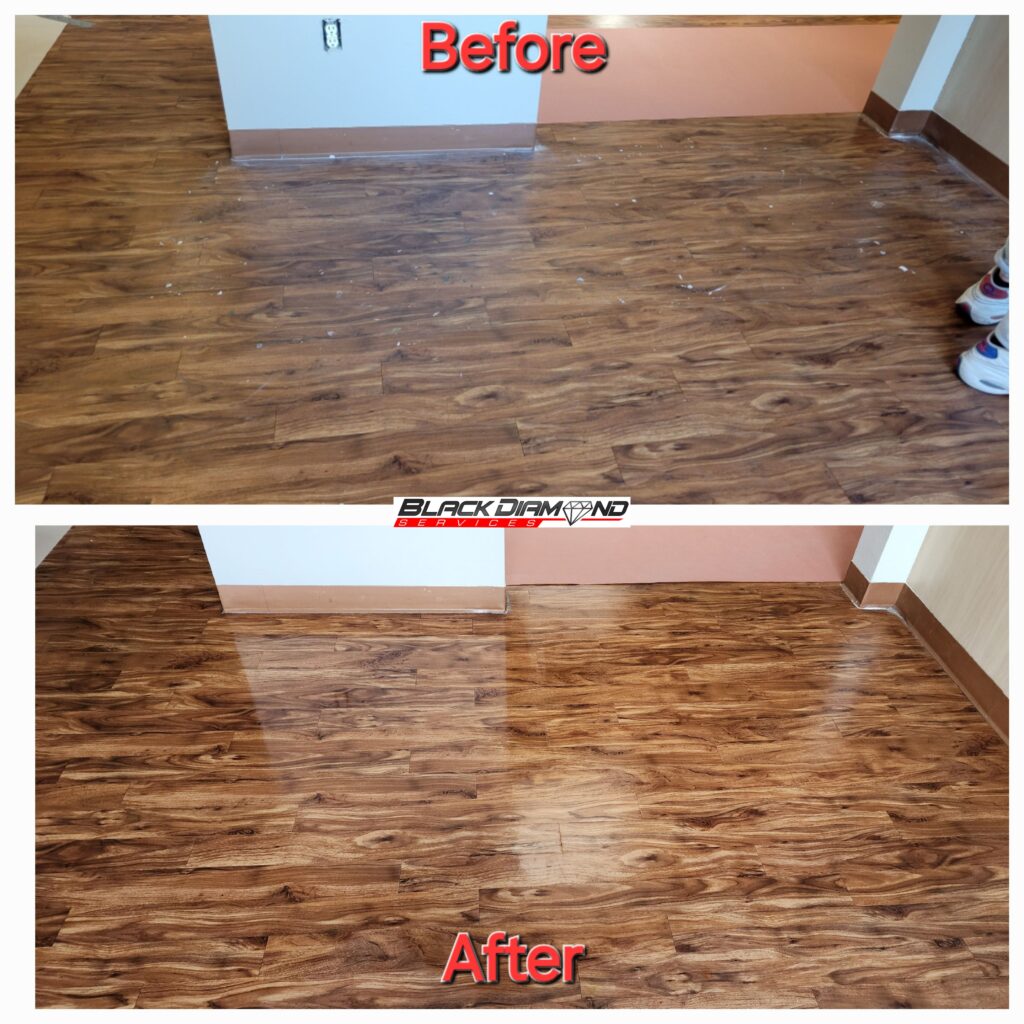
No-steam deep cleaning. Commercial floor cleaning equipment can deep clean LVP using appropriate cleaning solutions and extraction without the heat that damages vinyl.
Residue removal. If buildup from improper cleaning products has dulled your LVP, professional cleaning can sometimes remove this residue and restore the floor’s appearance.
Strip and restore. For floors with significant wax or polish buildup, stripping products can remove accumulated residue. This should only be done by professionals familiar with LVP to avoid damage.
How to Tell Hardwood from LVP
Not sure which flooring you have? Several tests can help identify your floor type.
Visual Inspection
Check the pattern. LVP has printed patterns that repeat every few planks. Look at the grain patterns across multiple boards—if you see identical patterns repeated, it’s vinyl. Real hardwood grain never repeats exactly.
Look at the edges. Where flooring meets walls or transitions, you may be able to see the plank edge. LVP shows visible layers. Solid hardwood is consistent wood throughout. Engineered hardwood shows a wood veneer over plywood layers.
Check for texture variation. Real wood has natural texture variation you can feel. LVP texture is uniform and machine-produced, even when it has embossed “grain.”
Physical Tests
The temperature test. Vinyl feels warmer to the touch than wood at room temperature. Place your hand on the floor—LVP feels less cold than hardwood.
The water drop test. Place a few drops of water on the floor and wait a minute. LVP beads water on the surface. Hardwood, especially with worn finish, absorbs water and may show a slight darkening.
The sound test. Walk across the floor in hard-soled shoes. Hardwood has a distinctive hollow, resonant sound. LVP sounds more muffled and “plastic.”
The dent test. Press a fingernail firmly into the floor in an inconspicuous area. LVP may show a small indent that springs back. Hardwood is harder and doesn’t indent as easily under finger pressure.
When in Doubt
If you’re uncertain after these tests, consult a flooring professional or check any documentation from when the floor was installed. Using the wrong cleaning approach based on a wrong guess can cause expensive damage.
Repairing Damage from Wrong Cleaning Methods
If your floors have already been damaged by improper cleaning, here’s what can be done:
Hardwood Damage Repair
Hazy finish from vinegar or wrong cleaners. If damage is limited to the finish surface, professional screening and recoating may restore appearance. Severe damage requires full sanding and refinishing.
Cupping or warping from water damage. Minor cupping sometimes resolves as the floor dries and reacclimates. Severe warping often requires board replacement. Water-damaged areas may also need subfloor inspection for mold.
Residue buildup from oil soap. Removing oil soap residue before refinishing requires aggressive cleaning or sanding. This adds significant cost to any refinishing project.
Scratches from abrasives. Light scratches may be addressed with screen and recoat. Deep scratches that penetrate the finish require full refinishing or board replacement.
LVP Damage Repair
Cloudy film from wax or polish buildup. Vinyl floor stripper can remove buildup, restoring clarity. This is usually a DIY-feasible repair if done carefully.
Wear layer damage from steam or abrasives. Once the wear layer is damaged, there’s no way to restore it. The plank must be replaced. LVP’s click-together installation makes individual plank replacement possible, though color matching may be difficult with discontinued patterns.
Warping from heat exposure. Warped planks must be replaced. Addressing the heat source (steam mop use, excessive sun exposure) is essential to prevent recurrence.
Creating a Proper Maintenance Schedule
Regular maintenance protects both flooring types and extends their useful life.
Daily
- Sweep or dust mop high-traffic areas
- Wipe up spills immediately
- Use entry mats to capture incoming soil
Weekly
- Dust mop or vacuum entire floor
- Spot clean any marks or spills with appropriate cleaner
Monthly
- Damp mop with appropriate products
- Inspect for damage, wear, or problem areas
- Clean entry mats
Annually
- Move furniture to clean underneath
- Consider professional cleaning
- Check for finish wear (hardwood) or wear layer damage (LVP)
- Replace worn entry mats
Every 3-7 Years (Hardwood)
- Professional screen and recoat to refresh finish
- Full refinishing if wear has penetrated to bare wood
Frequently Asked Questions
Can I use a steam mop on either hardwood or LVP?
No. Steam mops damage both flooring types—hardwood through excessive moisture penetration, and LVP through heat damage to the wear layer. Steam cleaning is not recommended for either surface despite marketing claims about certain steam mop brands.
What about Swiffer WetJets?
Swiffer WetJets can be acceptable for LVP if used sparingly with the multi-surface or wood floor solution. They’re riskier for hardwood because they apply more liquid than a wrung-out mop. If you use one on hardwood, spray minimally and dry immediately behind your pass.
My LVP says it’s waterproof. Why can’t I use lots of water?
The vinyl planks themselves are waterproof, but water can seep between planks and affect the subfloor. It can also leave mineral deposits or cleaning residue as it dries. The “waterproof” label means spills won’t damage the vinyl—not that you should flood the floor.
How do I remove pet urine stains from hardwood?
Pet urine on hardwood is challenging because it penetrates the wood grain. Fresh spills should be wiped immediately, then the area cleaned with an enzymatic cleaner. Old stains often require sanding and refinishing. Severe damage may require board replacement.
My floors are dull. Should I use a polish product?
For hardwood with polyurethane finish, no—polish creates buildup that attracts dirt and complicates future refinishing. The solution is professional screening and recoating. For LVP, no—polish leaves residue that dulls the surface further over time. The solution is proper cleaning to remove any existing buildup.
How can I protect floors from furniture scratches?
Use felt pads under all furniture legs and replace them when worn. Avoid dragging furniture—lift it to move. For rolling chairs, use a chair mat or switch to soft rubber casters designed for hard floors.
About Black Diamond Services
Black Diamond Services is a family-owned cleaning company based in Oakdale, California, serving Stanislaus and San Joaquin counties since 2017. Founded by Nolan and Janel Hill, Black Diamond has earned over 275 five-star reviews by treating every home like our own.
We provide professional hardwood and LVP floor cleaning using methods appropriate for each flooring type. Our technicians understand the differences between these surfaces and use products and equipment that clean effectively without causing damage.
Our services include carpet cleaning, house cleaning, tile and grout cleaning, rug cleaning, upholstery cleaning, hardwood floor cleaning, luxury vinyl plank cleaning, natural stone cleaning, and dryer vent cleaning throughout Oakdale, Modesto, Turlock, Tracy, Manteca, Ripon, Riverbank, Hughson, Escalon, Salida, Denair, and surrounding Central Valley communities.
Every job includes our 100% satisfaction guarantee, transparent pricing with no hidden fees, and the personalized service you’d expect from a local, family-operated business.
Not sure what type of flooring you have—or the best way to care for it? Call Black Diamond Services at (209) 264-8898 for a free consultation.
Last updated: March 2026